
Top 20 Best Small Business to Start in Malaysia - Profitable, Low Risk, High Potential

Malaysia’s entrepreneurial spirit is surging.
From tech and creative services to food and logistics, there’s never been a better time to explore small business ideas.
The government offers support through grants and incentives, digital platforms make launching easier than ever, and a growing middle class means more spending power.
Yet, many Malaysians hesitate to take the plunge. They ask questions like:
- “What business should I start?”
- “How much capital do I need?”
- “Where can I find reliable funding?”
This guide answers these questions by highlighting 20 promising, low-risk business ideas tailored for the Malaysian market, each with scalable potential and practical startup options.
20 Best Small Businesses to Start in Malaysia
So, what is the best business to start in Malaysia right now?
The good news is, you don’t need a huge budget to get started. With the right idea and execution, even a little investment can grow into something substantial well before you start exploring SME capital solutions.
The list below features 20 profitable businesses that are in-demand, practical, and well-suited to Malaysia’s market in 2025.
1. E-commerce for Niche Products
Launching an online store focused on niche products can be extremely profitable. Malaysians are no strangers to shopping online for specific needs like eco-friendly items, halal snacks, or local artisanal crafts. You can test demand on e-commerce platforms before expanding your product line.
- Startup Cost: RM1,000 – RM5,000
- Tools: Shopee, TikTok Shop, Shopify
- Scale: Build a strong brand, do product bundling, cross-border sales, and use paid ads or influencers to expand market reach
2. Cleaning Services with Commercial Contracts
Businesses and property managers are always looking for reliable cleaners. A cleaning service that targets offices, Airbnb units, or apartment buildings can start small and scale through contracts and staff hiring.
- Startup Cost: RM3,000 – RM8,000
- Tools: Cleaning equipment, scheduling software, invoicing software
- Scale: Hire staff, bid for corporate contracts, and offer add-on services
3. Local Logistics or Rural Delivery Services
Major logistics firms still underserve many rural and suburban areas in Malaysia. Starting a hyperlocal delivery service, even if it’s just groceries or small parcels, fills a real need.
- Startup Cost: RM5,000 – RM15,000
- Tools: Motorbike or van, routing software, booking app
- Scale: Collaborate with SMEs and e-commerce platforms, or run B2B last-mile delivery
4. Online Tuition & Enrichment (STEM, Language, Exam Prep)
The online education sector continues to thrive. Teaching core subjects, coding, or even language classes online can be done with minimal startup cost. Demand is especially high among students in suburban and rural areas.
- Startup Cost: RM500 – RM3,000
- Tools: Zoom, Google Meet, Canva
- Scale: Run group sessions, offer packages, or expand to YouTube or course platform.
5. Mobile Car Wash & Auto Detailing
A mobile detailing service is convenient and cost-effective for both the owner and customer. Add eco-friendly or waterless services to stand out, and consider subscription packages for recurring revenue.
- Startup Cost: RM2,000 – RM6,000
- Tools: Car detailing kits, booking system
- Scale: Subscription plans, corporate tie-ins, premium detailing, or partnerships with car parks
6. Halal Beauty or Skincare Brand
The demand for halal-certified personal care products is growing locally and globally. This business suits those passionate about skincare and branding.
- Startup Cost: RM5,000 – RM20,000
- Tools: OEM manufacturers, social media, e-commerce platform
- Scale: Build brand loyalty, expand into export markets, or offer private labelling
7. Home-Based Catering or Cloud Kitchen
Food delivery remains a booming space. A small kitchen setup for catering, meal prep, or home-cooked deliveries allows low overhead and high flexibility.
- Startup Cost: RM2,000 – RM10,000
- Tools: Delivery partner registration (e.g., Foodpanda, GrabFood, ShopeeFood), packaging, kitchen tools
- Scale: Specialise in niche cuisines or dietary needs, grow to a cloud kitchen, or launch a product line
8. Social Media Content & Ads Agency
The online space is flooded with new content day in, day it, and it’s not stopping anytime soon. Many SMEs need help with content creation, TikTok videos, or ad management. If you have digital marketing skills, this is a great B2B service.
- Startup Cost: RM1,000 – RM3,000
- Tools: Editing software (e.g., CapCut, Canva), Meta Business Suite
- Scale: Serve SMEs, run retainer packages, and hire junior creators
9. Reselling or Refurbished Electronics Business
There’s a steady demand for affordable gadgets. Buy and flip electronics like phones or laptops, or partner with refurbishers to create your own brand.
- Startup Cost: RM3,000 – RM10,000
- Tools: E-commerce platforms (e.g., Shopee/Lazada), repair kits, supplier contacts
- Scale: Bundle offers, student promos, launch a storefront or e-commerce site
10. Tech Repair & Phone Unlocking Services
Technical skills go a long way in device repair. Whether it’s cracked screens or firmware issues, this business meets everyday demand.
- Startup Cost: RM2,000 – RM6,000
- Tools: Repair tools, parts supplier, online tutorials
- Scale: Add on accessories and express repair options, offer corporate or school maintenance contracts
11. Urban Farming / Hydroponics / Agri-Tech
Urban farming and hydroponics (a method of growing plants with nutrient-rich water solutions instead of soil) are gaining traction in Malaysian cities due to growing interest in sustainable living and self-sufficiency.
You can sell starter kits, run workshops, or build systems for restaurants and homeowners. Agri-tech innovations like smart sensors and vertical farms also appeal to environmentally conscious consumers.
- Startup Cost: RM2,000 – RM12,000
- Tools: Hydroponic kits, sensors, marketing materials
- Scale: Offer B2B consulting or sell through online marketplaces
12. Dropshipping or Print-on-Demand
If you want to start a business without handling inventory, dropshipping or print-on-demand is ideal. Target niche categories like local slogans, Malaysian humour, or hobby-based merchandise to gain traction.
- Startup Cost: RM500 – RM3,000
- Tools: Printify, Shopify, Canva
- Scale: Offer viral products or niche merchandise, build a brand presence and upsell through social media ads
13. Freelancer Skills Agency (AI Prompting, Automation, Design)
Turn your freelance work into a scalable business. Start an agency that offers AI-driven services, graphic design, automation setup, or copywriting. Recruit other freelancers under your brand.
- Startup Cost: RM1,000 – RM4,000
- Tools: Upwork, Fiverr, Notion, Figma, ChatGPT
- Scale: Recruit specialists in AI, automation, design, build recurring packages and white-label services
14. Affiliate Marketing with Personal Branding
This business model rewards you for recommending products. Build an audience on Instagram, TikTok, or YouTube, then monetise through affiliate links. Find your niche (tech, parenting, finance, etc.) and be consistent with content.
- Startup Cost: RM500 – RM2,000
- Tools: Linktree, analytic tools, video editing apps
- Scale: Diversify into sponsored content and digital product sales
15. Thrift & Vintage Clothing (Live Selling Focus)
With the rise of live commerce, selling thrift fashion via Instagram, TikTok, or Shopee Live has become a low-cost way to launch a business. Focus on curated aesthetics or Y2K styles to attract Gen Z audiences.
- Startup Cost: RM1,000 – RM4,000
- Tools: Social media platform of choice, lighting setup, e-wallets
- Scale: Open a physical thrift pop-up or scale via consignment
16. 3D Printing Services for Prototypes or Custom Products
3D printing can be a profitable side hustle or business for engineers, designers, and creatives. Offer product prototyping, promotional items, or replacement parts.
- Startup Cost: RM4,000 – RM12,000
- Tools: 3D printer, CAD software, filament materials
- Scale: Serve SMEs, educators, or hobbyists with high-margin orders
17. Small-Scale Construction & Renovation Services
Home improvement is in high demand. If you have experience in carpentry, plumbing, or electrical work, this business allows you to serve homeowners and small commercial clients.
- Startup Cost: RM5,000 – RM20,000
- Tools: Tools and safety gear, licensing, worker recruitment, basic transportation
- Scale: Serve residential or retail renovation projects, hire subcontractors, or bid on larger contracts
18. Childcare or Enrichment Centre
Parents are always on the lookout for reliable early education and enrichment options. Starting a small centre at home or renting a small space lets you cater to this demand.
- Startup Cost: RM8,000 – RM50,000
- Tools: Licensing, premises, staff training, teaching materials, insurance
- Scale: Open additional branches or consider franchising
19. Digital Financial Advisory or Loan Brokerage
Many individuals struggle with financial literacy once they enter adulthood. Help Malaysians navigate personal loans, credit cards, or small business funding. Build trust with educational content and partner with financial institutions.
- Startup Cost: RM2,000 – RM5,000
- Tools: CRM system, website, email marketing
- Scale: Build a team of agents and monetise via commissions
20. Handyman & Mobile Maintenance Services
Basic repairs and maintenance are always needed, especially in fast-developing suburbs. A mobile handyman business lets you go where the work is and build a steady stream of clients.
- Startup Cost: RM1,000 – RM6,000
- Tools: Toolkit, Google Business Profile, transportation, business card
- Scale: Offer subscription packages or team-based services
Disclaimer: The startup costs listed are approximate estimates based on publicly available resources, local pricing, and typical Malaysian business setups. Actual costs may vary depending on location, supplier rates, and the scale of operations. |
What Makes These Businesses Work in Malaysia?

Malaysia’s business environment is uniquely supportive for micro and small ventures, especially those that can tap into digital platforms or fill a local service gap.
- High smartphone and e-wallet usage: Malaysians are highly connected and digitally savvy, making it easy to market and transact online. This high digital penetration gives even micro-businesses access to a large audience with minimal spend.
- Government support: Programmes like TEKUN, SME Bank, and HRDF offer grants, loans, and training to help entrepreneurs start and scale. These initiatives lower the entry barriers and reduce financial risks.
- Shift toward flexible work and business models post-COVID: Many consumers and professionals prefer flexible, remote, or mobile-friendly services. This creates demand for mobile car washes, food delivery, tutoring, and freelance services.
- Access to digital platforms: Shopee, TikTok, Grab, and the like offer low-cost channels to launch and test business ideas. With minimal investment, entrepreneurs can build brand awareness, run ads, and fulfil orders nationwide.
- Youthful, open-minded consumer base: There’s strong demand for homegrown brands, creative products, and tech-enabled services, especially among younger Malaysians. This consumer base is more willing to try new services and support local entrepreneurs.
Capital Strategy: How to Start with Minimal Funding
As mentioned, starting a business doesn’t always require a huge budget—just smart planning and resourcefulness.
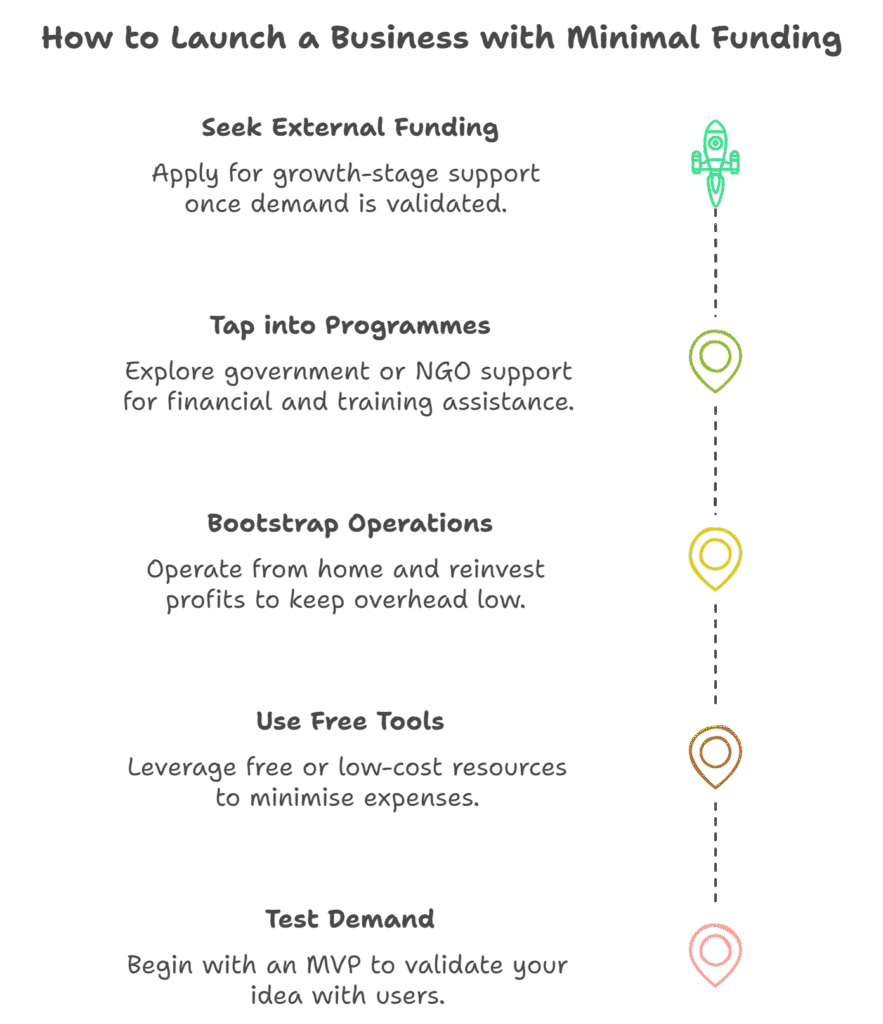
Here’s a step-by-step strategy to launch lean:
1. Start small and test demand
Begin with a minimum viable product (MVP) or pilot service. Focus on validating your idea with actual users and adjusting based on feedback.
2. Use free and low-cost tools
Maximise available resources such as Canva, Shopify free trials, Google Workspace, and community co-working spaces to minimise initial expenses.
3. Bootstrap early operations
Keep overhead low by operating from home, doing tasks yourself, and reinvesting early profits instead of drawing a salary.
4. Tap into government or NGO programmes
Check eligibility for SME Corp grants, TEKUN Nasional micro-financing, or MARA entrepreneur schemes to receive financial and training support.
5. Seek external funding only when validated
Once your company gains traction and you have proof of demand, apply for growth-stage support from organisations like Big Grain Capital to gain access to advisory services, capital equipment, or business startup funds in Sarawak.
💡 What is Big Grain Capital? Big Grain Capital is a trusted investment partner based in Sarawak. We offer a range of funding solutions, including private equity and venture capital in Kuching, alongside mentorship and strategic support for local startups and growing businesses. Whether you’re launching a tech venture, expanding your home-based business, or scaling up production, we help bridge the gap between potential and progress with capital equipment funding and advisory services tailored to your growth. |
Final Thoughts: What Is the Best Business to Start in Malaysia?
While timing and luck are factors that contribute to the success of a business, you don’t need to wait for the perfect moment to start your personal trade.
Ultimately, the best business to start in Malaysia, big or small, is one where you have a viable idea, a clear purpose, and the right support.
These 20 business ideas offer low-risk entry points with high potential in Malaysia’s thriving market. Smart planning makes all the difference.
Ready to turn your business idea into a reality? Get a free consultation with Big Grain Capital today to explore funding options and expert guidance for your target industry.





 English
  Chinese